counter

Tuesday, 22 September 2009

Fall Home Design Workshop Series: Get the Answers to Your Home Renovation and Design Dilemmas

Flyer: 2009 Wo-Built wobuilt Home Design Workshop Wise Daughters West Toronto JunctionFlyer: Update for our Fall 2009 Home Design Workshop Series
at Wise Daughters in the West Toronto Junction


October 8, 2009 update:
Unfortunately, our workshop sessions have been temporarily postponed as we are in the process of locating another venue.
For More Information: Please check our Design Workshop Sessions Page for further updates or
call 416-354-2555.


Hope everyone had a good summer! Because September is back-to-school month for most parents in the Junction, we will be resuming our Home Design Workshop Series again in October.

Our fall schedule will be as follows:

Wednesday, October 7, 7 – 9 pm
Designing with colours, materials and fabrics

Wednesday, October 21, 7 – 9 pm
How to go green

Wednesday, November 4, 7 – 9 pm
Planning a large renovation – what you need to know

Wednesday, November 25, 7 – 9 pm
Conservatories, additions and more

Wednesday, December 16, 7 – 9 pm
Solving problem spaces – bring photos of your home and get great design ideas

Series continues every 3rd Wednesday.
Fee for each session is $10, or all $40 for 5 sessions.

Want to take a workshop? Please pre-register:

Wise Daughters Craft Market
Local handicrafts and do-it-yourself workshops


3079B Dundas Street West
, Toronto, ON M5P 1Z9
(facing Quebec Avenue, just south Dundas, behind Crema Coffee)
There is ample street parking on Dundas and Quebec.
Via TTC: Junction bus # 40 from Dundas West Station,
Lambton bus # 30 (or 15 min. walk) from High Park Station.
Tel: 416-761-1555

Come join us and get the answers to your home renovation and design dilemmas in a friendly and informal session!

links:
Wo-Built Is Launching a New Home Design Series Covering All Your Home Improvement Questions
Wo-Built's First Session of the Home Design Workshop Series
How to Improve Your Home Spaces: Wo-Built Design Workshop
Get Your Smart Kitchen & Bathroom Design Ideas: Wo-Built's Home Design Workshop at Wise Daughters

Tuesday, 8 September 2009

Our Green and Eco Tweets to Follow

Collage: Wo-built Green and Eco Tweets

Collage: Our Green and Eco Tweets to Follow
Credits: MS Office ClipArt - j0437294 + Twitter

Here is review of our tweets exploring the latest green materials and green building technologies:

May 27
Renovation tip: eco-friendly flooring materials: Cork (very popular now) and for upmarket look: recycled Leather.

If you own a commercial, industrial or institutional building in Toronto and would like to explore the use of an Eco roof, contact us.

The Toronto Eco-Roof Incentive program:
Eco-Roof Incentive Program
http://www.toronto.ca/livegreen/bus_eco-roof.html

Jun 11
@zerofootprint - Your link to Ron Dembo's article http://tinyurl.com/mnt6hy is very interesting and thought provocing.
How Governments Should Fund Retrofits
by Ron Dembo
Posted: June 10, 2009
http://www.huffingtonpost.com/ron-dembo/how-governments-should-fu_b_213855.html

Jun 14
@styrohome Forget AC! Cool Your Home Naturally http://ow.ly/dMoa - Good article about natural ventilation - well worth reading
Forget AC! Cool Your Home Naturally
Slash (or eliminate) your air conditioning bills with these simple tips and remodeling recommendations.
August/September 2007
By Carol Venolia and Kelly Lerner
http://www.motherearthnews.com/Green-Homes/2007-08-01/Natural-Home-Cooling.aspx

Jul 15
@styrohome Interesting article about the first living building: http://www.emagazine.com/vi...
Live From New York
The First Living Building Sets the Bar
By Campbell Wood
http://www.emagazine.com/view/?4721

Energy Harvesting - article from Reuters: http://www.reuters.com/arti... Will this be used in the future?
Is Energy Harvesting Moving Into the Smart Home?
By MC O'Connor - Earth2Tech
http://www.reuters.com/article/earth2Tech/idUS109659598620090707

@zerofootprint:Thank you for bringing article on Why We Need a Globally-Recognized Unit of "Green" http://tinyurl.com/mldbht to our attention
Why We Need a Globally-Recognized Unit of "Green"
BY Ken Musgrave
Mon Jul 13, 2009
http://www.fastcompany.com/blog/ken-musgrave/thinkdesign/why-we-need-globally-recognized-unit-green

Interesting word: greenwashing - Cute description of the sins of greenwashing: http://sinsofgreenwashing.org/findings/the-seven-sins/
THE SEVEN SINS OF GREENWASHING
http://sinsofgreenwashing.org/findings/the-seven-sins/

Jul 17
Definition of 'green' building materials: California Integrated Waste Management Board: http://www.ciwmb.ca.gov/greenbuilding/Materials/

Very informative website about 'green' building materials: http://www.greenspec.co.uk/

Jul 21
What would a house look like with as many "green" building measures as possible? We at Wo-Built would like to hear of examples and ideas.

Another interesting "green" site: http://www.greenbuildingadvisor.com/green-basics

Another interesting "green" site: http://www.thesexygreenhome.com/

Jul 22
Fusion Landscaping? The Peel Region's (Ontario) ideas on how to have a great garden: http://www.peelregion.ca/watersmartpeel/outdoor/fusion/

Jul 26
Interesting:RT@toolgirldotcom Hey charities, this is big - RT @unmarketing: How to Raise Money on Twitter – Tweetathon 101
http://www.un-marketing.com/blog/2009/07/22/how-to-raise-money-on-twitter-tweetathon-101/

With the City strike
still on I am definitely thinking of getting a "worm hotel" (Vermicomposter)
http://www.cathyscomposters.com/event/

It's amazing how much kitchen waste does accumulate in a short time - not good during a garbage strike - Vermiculture is looking attractive

Jul 27
The future of building? RT @mrochte: FT article: Natural Buildings - learning from Termites #biomimicry #greenbuilding
http://www.ft.com/cms/s/2/ac80b372-71a1-11de-a821-00144feabdc0.html

Ideas should work in colder climates as well. RT @buildaroo: First Projected LEED Platinum Restaurant. #greenbuilding
http://www.buildaroo.com/2009/07/22/jlc-architecture-the-first-projected-leed-platinum-restaurant/

Jul 29
Great usage of space! We need more of this - RT @skemsley Green roof on Eglinton West (Toronto) subway station -- nice!
http://spacing.ca/wire/2009/07/28/green-roof-up-on-eglinton-west-subway-station/

Green material: Bamboo - http://planetgreen.discovery.com/home-garden/teach-kids-sustainable-bamboo.html

Tuesday, 1 September 2009

Tales from the Renovation Track: Tricks of the Trade That Make Home Repairs/Renos Much Easier and Complete

Collage: tools, construction, tools, women
Credits: MS Office ClipArt - j0285894

There are even more tricks of the trade that help a homeowner to improve DYI renovations.

Part 11c - Tidbits of Wisdom
During my work day I often run across a whole plethora of renovations completed by homeowners - some of which are done well or adequately. At the same time there are certain tricks of the trades that can make some of the repairs/renos much easier and complete.

Here are some of these tips:

5. Drywall mud. In the larger sizes, drywall mud comes in plastic buckets with lids or in a plastic bag in a cardboard box. It’s better to purchase the bucket because it is more reusable. When you use a bit of the drywall mud out of the plastic bag from the cardboard box and then reseal it for use for the next time round, the bits of mud dry at the top of the bag and then fall into the wet mud at the bottom of the bag when you open it. When you go to trowel this on, what you get are frustrating grooves where the dried mud drags through the wet stuff.

I had the chance to talk with a drywall contractor about this, and he told me he gets the plastic pails. When he has enough of them he will buy the mud in plastic bags and then put the mud into the cleaned pails. How he does this is by getting a grout sponge, wetting it and cleaning all the mud off the top of the newly opened bag. He then puts three wet spongefulls of water into the bag after the top is cleaned, rolls the bag of mud around and then drops it into a clean, reused drywall plastic pail. When you use the pails with the plastic lids make sure you scoop around the inside perimeter of the pail and remove any mud before storing so this mud won't dry and contaminate the wet stuff. Then for storage purposes, one can pour a skim coat of water on top of the wet mud, of, say 1/8 of an inch deep so the mud at the top won't dry out before you use it again. You should always put a little water in the mud at the start of using a fresh batch, as it smooths out better. Or, if using stored mud, just mix in the skim coat of water and you're in I am parging a wall business!

6. Admixtures. You can use white glue as an additive for concrete or drywall mud. I use it in concrete when I am doing smaller repairs as it assists the concrete to adhere to the old stuff. Or if, you can mix the white glue into the concrete, or conversely paint it on the wall first before applying the concrete.

I will put it in drywall mud particularly in repairs on cracked corners, where the building is moving continually, for instance in a trailer with drywall that heaves slightly in the springtime. Just use it in the mud used to put the tape on and use it carefully because it doesn't sand very well, so don't leave globs around to deal with later. As a matter of fact if you detest trying to get a smooth butt joint on drywall when dealing with the joints on the ends of the drywall that are not tapered you can take white glue only, spread it on the back of the paper tape and glue it down to the drywall without using any mud. This gives you less of a feathering out process to do and you don't get the bubbles forming from improperly applying the paper tape with mud.

A second admixture that a homeowner can add to concrete is dish detergent. Adding a small amount, like say a tablespoon to a batch of concrete creates an inexpensive air entrainment admixture. Air entrainment is adding microscopic air bubbles to concrete which creates voids in the concrete when it dries. In wintertime, when water freezes, it expands in volume and can crack concrete, but the microscopic bubbles leave spaces in the concrete where the water can expand into and prevents the concrete from cracking.

Happy Renovating!

Janice Bell
Bell Renovating
2009 © Janice Bell

Tales from the Renovation Track: One Woman’s Experiences of Being a Renovator
Part 1: All in All
Part 2: Weld on Fire
Part 3: They Were Nailed
Part 4: It Pays to Be Honest
Part 5: Rural Renos
Part 6: Messy Is Costly
Part 7: Door Hell
Part 8: Just Where Do I Stop?
Part 9: Dressing for the Trades

Part 10: Very Painterly
Part 11a: Tricks of the Trade: Recaulking bathtubs / Placing peel and stick tiles
Part 11b: Tricks of the Trade: Wheelbarrows / Cutting a plastic pipe
Part 11c: Tricks of the Trade: Drywall mud / Admixtures


links:
wikihow.com: How to Tape and Mud Drywall
wikipedia.org: Drywall

Thursday, 27 August 2009

Tales from the Renovation Track: Tricks of the Trade That Make Home Repairs/Renos Much Easier and Complete

Collage: tools, construction, wheelbarrows, women
Credits: MS Office ClipArt - j0382973

More tricks of the trade that help a homeowner to improve DYI renovations.

Part 11b - Tidbits of Wisdom
During my work day I often run across a whole plethora of renovations completed by homeowners - some of which are done well or adequately. At the same time there are certain tricks of the trades that can make some of the repairs/renos much easier and complete.

Here are some of these tips:

3. Wheelbarrows. I once worked on a large concrete pour, that, because of the site specifics all of the concrete had to be delivered via wheelbarrow to the formwork. The men and I (the sole woman) went over to where all the wheelbarrows were kept and one by one got our wheelbarrows. I noticed at the time that the men were in a bit of a haste to get their wheelbarrows which puzzled me. I was the last one to get mine and I noticed that all the guys had left this one particularly smaller wheelbarrow. I was amused thinking that they had left the smaller one for me as I was a woman.

However, this was simply not the case. They were in a rush to pick out a wheelbarrow because certain wheelbarrow configurations are more superior to use than others. The wheelbarrow I ended up with was by far the worst configuration. Look at the front of the bucket of the wheelbarrow, and compare it to the placement of the front wheel. The more of the bucket that goes over the wheel the better, because then the wheel itself is carrying more weight. The best ones have the bucket extending past the front of the front wheel. The one I ended up with, had the front curled lip of the bucket edge, over the back part of the wheel, behind the wheel's axle which meant that your arms carried more of the weight, rather than the wheel.

If your wheelbarrow regularly carries 300 pounds or more, your arms will tell you the difference. Having the bucket placed ahead of the front wheel, also lets you direct your contents better, without pouring them onto the wheel itself when you tip it up.

4. Cutting a plastic pipe. Have you ever had to cut a large plastic round pipe to length, and it turned out crooked because you couldn't draw a straight line around it to follow with your saw? I figured out a good way to do this.

I measure from the 90 degree factory edge with three different marks or more around the circumference of the pipe. I then take my tape measure and place it printed side down onto the pipe because in the printed side down position the tape can curl around the pipe to connect the first two points. Then I use the tape as an edge for my pencil to draw my line between the first two points, rotating the pipe, placing my tape measure tape down again and using the edge to draw another line connecting the next two points, etc. etc. This works very well.

Happy Renovating!

Janice Bell
Bell Renovating
2009 © Janice Bell

Tales from the Renovation Track: One Woman’s Experiences of Being a Renovator
Part 1: All in All
Part 2: Weld on Fire
Part 3: They Were Nailed
Part 4: It Pays to Be Honest
Part 5: Rural Renos
Part 6: Messy Is Costly
Part 7: Door Hell
Part 8: Just Where Do I Stop?
Part 9: Dressing for the Trades

Part 10: Very Painterly
Part 11a: Tricks of the Trade: Recaulking bathtubs / Placing peel and stick tiles
Part 11b: Tricks of the Trade: Wheelbarrows / Cutting a plastic pipe


links:
lifestyle.yahoo.com: The right wheelbarrow
Easy2.com: Working with Plastic Piping Tutorial

Tuesday, 25 August 2009

Tales from the Renovation Track: Tricks of the Trade That Make Home Repairs/Renos Much Easier and Complete

Collage:caulking, home improvements, repairs, tools, women

Collage:caulking, home improvements, repairs, tools, women
Credits: MS Office ClipArt - J0426549

We continue our publishing of Janice Bell’s articles One Woman’s Experiences of Being a Renovator. Now - tricks of the trade that help a homeowner to improve DYI renovations.

Part 11a - Tidbits of Wisdom
During my work day I often run across a whole plethora of renovations completed by homeowners - some of which are done well or adequately. At the same time there are certain tricks of the trades that can make some of the repairs/renos much easier and complete.

Here are some of these tips:

1. Recaulking bathtubs. This is a very common task that plenty of homeowners take on. One trick to get a better result is to first fill the tub at least three quarters of the way with water. Why you should ask? Compare the tub to a plastic grocery bag. If you put a rock in it, the sides of the bag draw together and the bottom goes down from the weight of the rock pulled by the force of gravity. It’s the same thing with the tub with water in it. The sides pull in and the bottom sinks a bit. This forces the sides of the tub away from the wall, which maximizes the size of the gap to be caulked. When you fill the maximized gap, leave the water in overnight if possible until the caulk is set. When the tub is drained out, the gap closes a bit and this tightly seals the caulk in. Then when you use the tub, you don't strain the gap. Not filling the tub first always stretches the caulk when you use the bathtub, and causes premature failure.

2. Placing peel and stick tiles. This is a relatively easy chore for most people to accomplish. However, many don't realize that there is a primer that should first be used to seal the floor, especially if one is placing the tiles on plywood. Plywood floors are porous and not altogether perfectly smooth. This minimizes the amount of adhesive contact between the tile and the flooring, causing failure. I put on 3 coats, especially on plywood, which renders it as close to impervious as you can get.

Happy Renovating!

Janice Bell
Bell Renovating
2009 © Janice Bell

Tales from the Renovation Track: One Woman’s Experiences of Being a Renovator
Part 1: All in All
Part 2: Weld on Fire
Part 3: They Were Nailed
Part 4: It Pays to Be Honest
Part 5: Rural Renos
Part 6: Messy Is Costly
Part 7: Door Hell
Part 8: Just Where Do I Stop?
Part 9: Dressing for the Trades

Part 10: Very Painterly
Part 11a: Tricks of the Trade: Recaulking bathtubs / Placing peel and stick tiles


links:
ehow.com: How To Do Just About Everything: How to Recaulk a Bathtub
repair-place.com: Ask The Guru any Do It Yourself or Construction question!: Peel and Stick Tiles

Thursday, 30 July 2009

Wo-Built Sound Bites: A Radio Dialog About Renovation and Design

Click on the image to hear the interview.
Collage: A renovation company‘s rites of passage –
our evolving missions and commitments
2009 @ wobuilt.com


Deborah's interview with Proud FM on July 8, 2009 talking about our favourite subject: Wo-Built. You can hear first hand of what makes us so different.

Many thanks to the Proud FM team for their great interview with us.

Wo-Built's interview on 103.9 Proud FM Morning Show link: http://wobuilt.com/interviews/Wo-Built.mp3

Tuesday, 28 July 2009

Going Green in the City: Building and Renovating with "Being Green" in Mind: Part 3

Wobuilt: Going Green in the City: Building and Renovating with Being Green in Mind, Living Rooftops

Collage: Going Green in the City:
Building and Renovating with "Being Green" in Mind:
Living Rooftops - An Environmental Alternative for "Green" Building
Credit: MS Office Clip Art: clouds + sun + green conservation

Green roofs:
New Green Roof Bylaw Passed By Council

On May 26, 2009 Toronto became the first City in North America to adopt a bylaw to require and govern the construction of green roofs on new development.

The bylaw will apply to all new building permit applications made after January 31, 2010 (residential, commercial and institutional) and January 31, 2011 for all new industrial development.

Credit: City of Toronto: Green Roofs

Part 3: Living Rooftops - An Environmental Alternative for "Green" Building

Green rooftops, also referred to as eco-roofs or living roofs have been popular in Europe for a while now, and in our global quest for building "green" the idea of a green rooftop seems to be catching on here in Toronto and other parts of Canada.

Aside from esthetics, there are many practical benefits of a green rooftop. Green rooftops are a source of economical insulation (cooling in the summer – the grass prevents the sun from heating the rooftop therefore keeping it cool in the summertime) and warming in the wintertime (as heat is prevented from escaping through the roof because of the layer of grass) which makes this an ideal way to keep energy costs down. Another redeeming quality is that because green roofs absorb a significant amount of noise (nature’s insulation) the resulting effect is a reduction of noise pollution both inside the home and out.

Green rooftops are also very ecologically friendly as they provide vegetation for a variety of beneficial insects and a resting ground for butterflies, migratory birds and other wildlife facing a shortage of natural habitat. In addition green rooftops retain a considerable amount of rainfall necessary to their survival therefore providing major relief on overburdened sewer systems. Recycling at its best!

A green rooftop normally consists of several layers that would include a waterproofing casing, insulation, a protective layer, a drainage layer, a filter mat, a soil layer, and the vegetation. The vegetation can range from grass to shrubs or even trees, depending on the weather conditions and the load-bearing capacity of the roof. If you are exploring the idea of a green rooftop, low cost, low maintenance and low weight are the key elements to look for.

In today’s pursuit for eco-friendly or "green" building and energy conservation, green rooftops are just one more alternative that seems to be catching on slowly but surely.

For more information on eco-roofs as well as eco-roof incentive programs, please go to http://www.toronto.ca/livegreen. This website promotes environmentally-friendly issues and energy conservation so you will find many other tips to help you on your way to "green" living!

Alternatively, give us a call at 416-402-2679 if you are in the Toronto or GTA area and are interested in building a green roof.

Lonya is the staff writer for Wo-Built Inc.


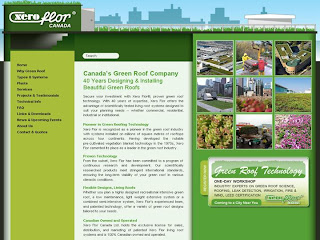
Screenshot: Xero Flor Canada’s Green Roof CompanyScreenshot: Xero Flor®: Canada’s Green Roof Company
40 Years Designing & Installing Beautiful Green Roofs
Credit: xeroflor.ca


Update:
toronto.ca: Green Roof Bylaw
"Toronto is the first City in North America to have a bylaw to require and govern the construction of green roofs on new development. It was adopted by Toronto City Council in May 2009, under the authority of Section 108 of the City of Toronto Act.
The Bylaw applies to new building permit applications for residential, commercial and institutional development made after January 31, 2010 and will apply to new industrial development as of April 30, 2012."
Credit: toronto.ca/greenroofs


links:
Going Green in the City: Building and Renovating with "Being Green" in Mind:
Part 1 - Eco-Friendly Home Improvements
Part 2 - Going Green Is Becoming Mainstream
Part 3 - Living Rooftops - An Environmental Alternative for "Green" Building
Home Renovation Tip: Donate Reusable Items to Non-For-Profit Organizations
Wo-Built: Helping to Green our Province
Interesting Reading: Government Help for Going Green in Homes
Wo-Built: Help for Going Green at Work
toronto.ca: City of Toronto: Green Roofs
snapbloorwest: Going Green in Your Own Backyard
nrc-cnrc.gc.ca: NRC Institute for Research in Construction
lid-stormwater.net: Low Impact Development (LID) Urban Design Tools Website